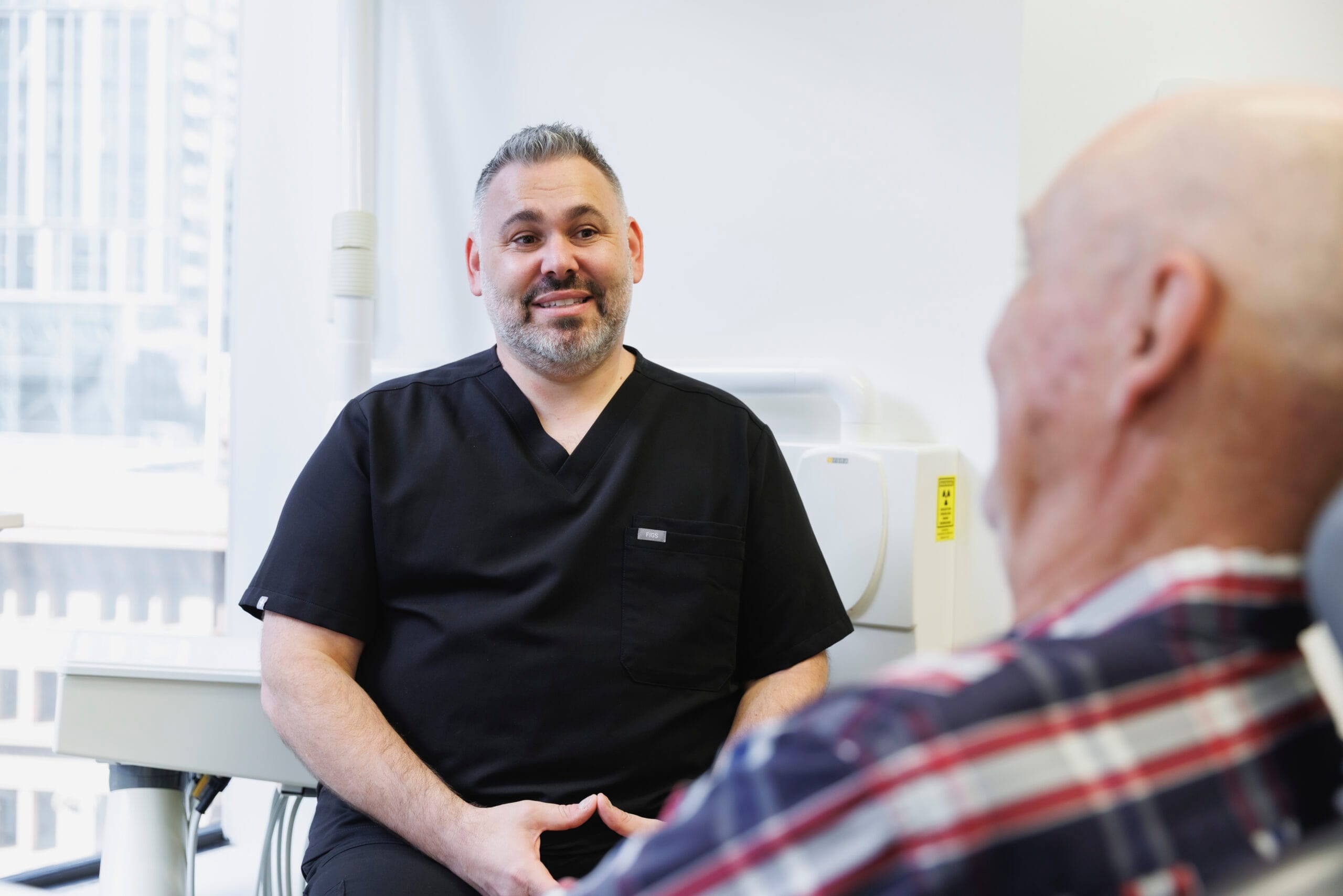
Dental implants are a well-established option for replacing missing teeth when clinically appropriate. While some implant treatments may be relatively straightforward, others require significantly more planning, diagnostics and clinical assessment.
At Sydney Dental Aesthetics & Implants (SDAI), we regularly assess patients with complex implant needs, including bone loss, multiple missing teeth, previous implant complications and full-arch rehabilitation requirements. These situations often benefit from advanced implant planning to help determine appropriate treatment options and support informed decision-making.
Why Do Some Dental Implant Cases Require Advanced Planning?
Advanced implant planning involves detailed assessment of a patient’s oral health, bone structure, medical history, functional requirements and long-term treatment goals. Digital diagnostics, CBCT imaging and comprehensive treatment planning may be used to evaluate individual circumstances before treatment recommendations are made.
Can You Have Dental Implants If You Have Bone Loss?
Bone loss is one of the most common reasons implant treatment becomes more complex. Following tooth loss, the jawbone may gradually resorb over time. Additional factors such as periodontal disease, trauma, infection or long-term denture wear may also affect available bone volume.
Advanced planning helps assess bone quantity, density and anatomical limitations, allowing clinicians to determine whether implant treatment may be appropriate and whether additional procedures should be considered as part of treatment planning.
Why Multiple Missing Teeth Require Specialised Planning
Replacing multiple missing teeth presents different challenges compared with replacing a single tooth. Changes in bite alignment, reduced bone volume, existing restorations and functional requirements must all be considered.
Advanced planning assists in determining implant positioning, restorative design and long-term maintenance considerations tailored to the individual patient.
What Happens When a Previous Implant Has Failed?
Patients occasionally seek assessment following complications associated with previous implant treatment. Understanding the cause of the complication is an important step before considering further treatment.
Assessment may include clinical examination, CBCT imaging, review of treatment history and evaluation of surrounding bone and soft tissues to help guide future treatment decisions.
How Digital Implant Planning Supports Complex Cases
Modern implant dentistry relies heavily on digital diagnostics. At SDAI, planning may incorporate digital photography, intraoral scanning, CBCT imaging and digital treatment planning software.
These tools assist with assessment of anatomy, evaluation of bone volume and treatment planning discussions, helping patients better understand their options.
When Dentists Refer Complex Implant Cases
Many dentists manage straightforward implant cases within their practices. However, certain situations may benefit from referral for additional assessment, including significant bone loss, multiple missing teeth, full-arch treatment requirements, advanced bone grafting considerations and previous implant complications.
Referral allows patients to receive comprehensive evaluation and planning for more complex clinical situations.
About Dr Dean Licenblat
Complex implant planning at SDAI is led by Principal Dentist Dr Dean Licenblat.
Dr Licenblat has completed extensive postgraduate education in implant dentistry, including a Master of Science in Oral Implantology from Goethe University in Frankfurt. His qualifications include Diplomate of the American Board of Oral Implantology (ABOI) and Diplomate of the International Congress of Oral Implantologists (ICOI).
In addition to treating patients, Dr Licenblat is involved in postgraduate implant education and continuing professional development programs for dental practitioners. He regularly receives referrals from dentists seeking assessment and treatment planning for complex implant cases. All treatment recommendations are based on individual clinical circumstances and current professional standards.
Frequently Asked Questions
Can dental implants be placed if there is significant bone loss?
A clinical assessment is required to determine suitability. Additional procedures may be considered in some circumstances as part of treatment planning.
Why would a dentist refer me for implant treatment?
Some implant cases involve anatomical, restorative or surgical complexities that may benefit from additional assessment and planning.
Can a failed implant be replaced?
Treatment options depend on the cause of the complication, the condition of surrounding tissues and the patient’s overall oral health.
What is a CBCT scan?
A Cone Beam CT scan provides three-dimensional imaging that assists with assessment of bone volume, anatomy and implant planning.
Discuss Your Options
Every implant case is unique. Factors such as bone loss, multiple missing teeth, previous implant complications and complex restorative requirements may require additional investigation and planning.
At Sydney Dental Aesthetics & Implants, Dr Dean Licenblat and the SDAI team provide comprehensive implant assessments for both patients and referring dentists, helping individuals understand their treatment options through personalised and evidence-based planning.